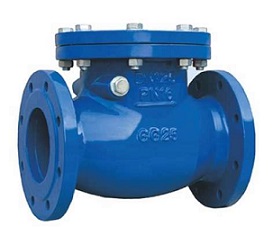
DIN Swing Check Valve

A reliable non-return valve designed in accordance with DIN standards, featuring a swinging disc that opens to allow forward flow and closes automatically to prevent backflow.

View Technical Specs
DIN Resilient Seated NRS Gate Valve

Product Overview

The DIN Swing Check Valve is engineered to meet the stringent requirements of DIN standards, ensuring reliable performance in a wide range of industrial applications. Its simple yet robust design features a hinged disc that swings open when flow passes in the forward direction, and closes automatically when flow reverses, preventing backflow and protecting pumps, compressors, and other equipment.

Constructed from high-quality materials such as ductile iron, carbon steel, or stainless steel, the valve offers excellent corrosion resistance and durability. The disc is typically made of stainless steel with resilient seating materials like PTFE or EPDM, ensuring tight shutoff even at low pressures.

With its flanged end connections, the valve is easy to install and maintain. It is suitable for a wide range of applications, including water treatment, HVAC, oil and gas, chemical processing, and power generation.

Key Features & Benefits

Swing Disc Design

A single hinged disc provides reliable closure, minimizing water hammer and ensuring bubble-tight shutoff.

Robust Construction

Heavy-duty materials and precision engineering ensure long service life and resistance to harsh operating conditions.

Low Pressure Drop

Streamlined flow path minimizes pressure loss, improving system efficiency and reducing energy costs.

Corrosion Resistance

Available in a range of materials including stainless steel and Hastelloy for compatibility with aggressive media.

Easy Maintenance

Simple construction allows for easy inspection and replacement of discs and seats without removing the valve from the pipeline.

Wide Application Range

Suitable for use in water, oil, gas, steam, and chemical applications across various industries.

Technical Specifications

Basic Parameters

Parameter Specification Range
Nominal Diameter (DN) 15mm ~ 1200mm
Pressure Class PN10, PN16, PN25, PN40, PN63
Operating Temperature -20°C ~ 425°C (Depending on material)
Applicable Media Water, Oil, Gas, Steam, Chemicals
Sealing Class API 598 Class VI, ISO 5208 Class 1

Material Specifications

Component Material Options Standards/Features
Body Ductile Iron, Carbon Steel, Stainless Steel ASTM A536, ASTM A216 WCB, ASTM A351 CF8/CF8M
Disc Stainless Steel, Hastelloy ASTM A182 F304/F316, Hastelloy C276
Seat Resilient Polymers, Metal PTFE, EPDM, Viton, Stellite
Hinge Pin Stainless Steel ASTM A182 F304/F316
End Connection Flanged EN 1092-1

Standards & Compliance

  • Design Standards: DIN 3202, DIN 3352
  • Face-to-Face Dimensions: DIN 3202
  • Flange Standards: EN 1092-1
  • Testing Standards: DIN 3230, ISO 5208
  • Certifications: CE, ISO 9001

Working Principle

The DIN Swing Check Valve operates on a simple yet effective mechanism to control fluid flow:

  1. Open Position: When fluid flows in the forward direction, the pressure pushes the disc open, allowing unobstructed flow through the valve.
  2. Closing Action: When flow reverses, the weight of the disc and backflow pressure cause it to swing closed, preventing reverse flow.
  3. Sealing Mechanism: The resilient seat on the disc compresses against the valve body, creating a tight seal that prevents leakage even at low pressures.
  4. Water Hammer Prevention: The gradual closure of the disc minimizes water hammer, reducing the risk of damage to the pipeline and equipment.

Application Areas

Water Treatment

Used in water treatment plants, distribution networks, and wastewater systems to prevent backflow and protect pumps.

HVAC Systems

Ideal for heating, ventilation, and air conditioning systems to maintain proper flow direction and prevent system damage.

Oil & Gas Industry

Suitable for use in oil and gas pipelines, refineries, and petrochemical plants to prevent backflow and ensure system integrity.

Chemical Processing

Used in chemical plants to handle corrosive and aggressive fluids, ensuring safe and reliable operation.

Power Generation

Ideal for use in power plants, including thermal, nuclear, and renewable energy facilities, to protect turbines and other equipment.

General Industry

Suitable for a wide range of industrial applications, including manufacturing, mining, and food processing.

Installation & Maintenance

Installation Guidelines

  • Ensure the valve is installed in the correct orientation with the flow direction arrow on the body pointing in the direction of flow.
  • Clean the pipeline and remove any debris before installation to prevent damage to the valve internals.
  • Install the valve between two flanges using appropriate gaskets and bolts. Tighten the bolts evenly in a crisscross pattern to the recommended torque.
  • For horizontal installations, mount the valve with the hinge pin in the horizontal position. For vertical installations, ensure the flow is upward.
  • Do not use the valve as a support for the pipeline. Provide adequate support to prevent stress on the valve body.
  • Perform a leak test after installation to ensure proper sealing.

Maintenance Recommendations

  • Inspect the valve regularly for signs of wear, corrosion, or leakage. Replace any damaged components as needed.
  • Lubricate the hinge pin periodically to ensure smooth operation.
  • Clean the valve internals if there is a buildup of debris or scale that could affect performance.
  • Check the disc alignment and seating to ensure proper closure. Adjust or replace the disc and seat if necessary.
  • Keep records of maintenance activities and replacement parts for future reference.

Frequently Asked Questions (FAQ)

Q: What is the difference between a DIN swing check valve and a dual plate wafer check valve?

A: DIN swing check valves have a single hinged disc and are typically larger and heavier than dual plate wafer check valves. They are better suited for larger diameters and higher flow rates, while dual plate wafer check valves are more compact and lightweight with a lower pressure drop.

Q: Can DIN swing check valves be used for steam applications?

A: Yes, DIN swing check valves can be used for steam applications, but they must be made of materials suitable for high temperatures and pressures. It is important to select the correct seat material (e.g., metal or high-temperature polymer) for the specific steam service conditions.

Q: How do I select the right size DIN swing check valve for my application?

A: The size of the valve should be based on the nominal diameter (DN) of the pipeline and the flow rate. It is also important to consider the pressure rating and temperature of the application to ensure the valve can handle the operating conditions.

Q: Are DIN swing check valves suitable for vacuum applications?

A: DIN swing check valves are not typically recommended for vacuum applications, as the weight of the disc may not be sufficient to keep it closed against a vacuum. For vacuum service, a specialized check valve designed for low-pressure conditions should be used.

Q: Can DIN swing check valves be installed in any orientation?

A: DIN swing check valves are designed to be installed in horizontal pipelines with the hinge pin in the horizontal position. They can also be installed in vertical pipelines with upward flow, but downward flow is not recommended as it may affect the closing performance.

Need Custom Solutions?

Our engineering team can customize DIN Swing Check Valves to meet your specific pressure, temperature, and media requirements. Contact us today for a personalized quote.

Contact Our Technical Team